Powering the shift

From food staple to fiber protector — starch is powering the shift to next-generation low-dk (dielectricity/permittivity) glass in tomorrow’s electronics.
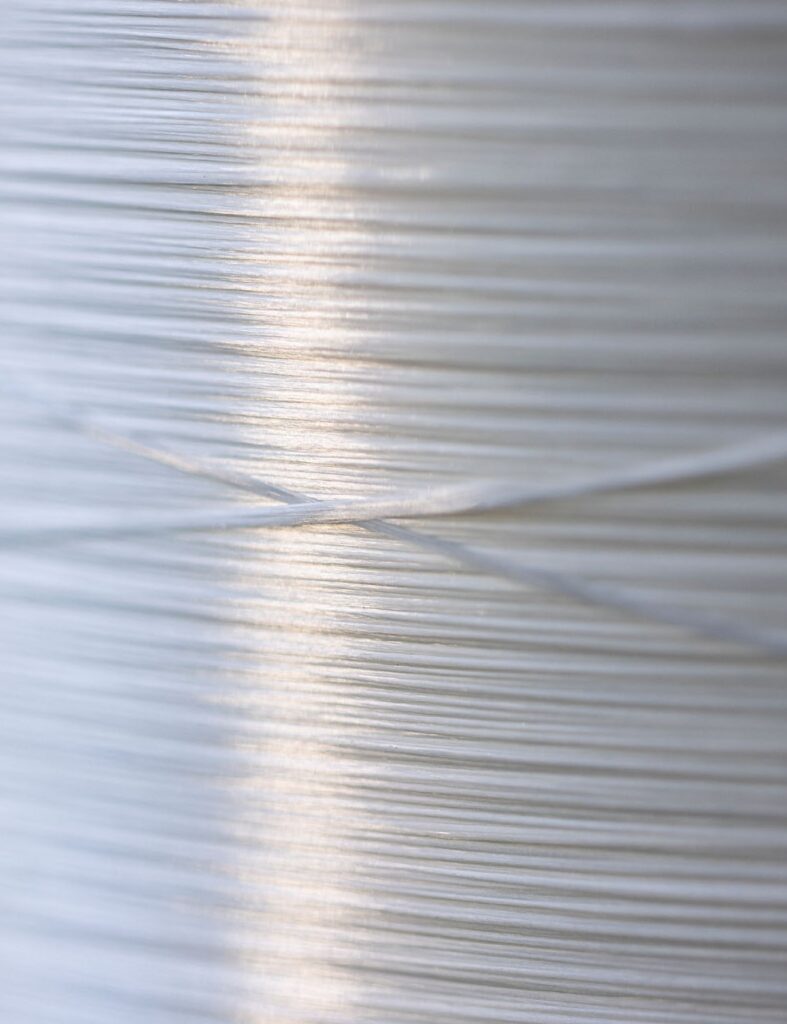
Glass Fiber Sizing — Powering the Devices of Modern Life
From the smartphone in your pocket to the computer on your desk — chances are, you’re looking at something that relies on glass fibers. These tiny, versatile filaments are essential in electronics, construction, automotive, and even high-speed data transfer.
In electronics, glass fibers are a crucial reinforcement in printed circuit boards (PCBs), where they provide the strength and insulation needed for nearly every electronic device we use such as cell phones, computers, and TVs.
A Lesser-Known Role for Starch
When you think of starch, you’re likely not thinking about fiber optics or high-performance electronics. Yet one of starch’s most important roles is in glass fiber sizing. By acting as a binding and protective agent, starch helps prepare glass fibers for the demanding environments inside your favorite devices.
This is a perfect example of how renewable, plant-based resources can make an invisible yet vital contribution to modern technology — far beyond the kitchen.
Why Pre-Sizing Matters
Pre-sizing is the very first sizing step applied immediately after molten glass exits the nozzles and forms filaments. Without this protective coating, the freshly formed fibers could not be produced or handled without breaking. The pre-sizing solution — containing starch among other components — enhances adhesion between filaments, improves flexibility, and protects the fibers from damage during the initial stages of manufacturing.
In high-performance electronics, the right pre-sizing is crucial to minimize filament breakage from the very beginning, ensure compatibility with subsequent processing steps, and provide strong adhesion between the fibers and the starch—without compromising mechanical strength.
When the glass fibers are later processed into fabrics for applications such as printed circuit boards, they typically undergo an additional sizing step known as warp sizing. This process protects the fibers during weaving and enhances their processing properties. Due to the highly demanding nature of the weaving process, this additional sizing step is indispensable.
That’s where Emsland Group’s Emglass® range comes in. Our starch-based solutions are designed for optimal pre-sizing performance, offering:
- Strong binding power
- Low ash content for cleaner processing
- Excellent film flexibility and tack
- Easy preparation and compatibility
And because our starches are plant-based and renewable, they bring additional sustainability benefits — lower combustion temperature (which means lower energy consumption and emissions during the desizing process), reduced greenhouse gas emissions, and biodegradability — without sacrificing performance.
Industry Shift: The Challenge of Low-dk Glass
The glass fiber industry is undergoing a major transformation with the introduction of a new material: low-dk glass. In contrast to conventional E-glass, low-dk glass features a modified composition — with a higher boron content and a lower calcium level — resulting in distinct physical properties. It exhibits reduced static charge, enhanced electrical insulation, and is therefore particularly well suited for use in high-speed electronics and AI-driven systems.
However, these benefits come with challenges: low-dk fibers are more brittle, have a less-smooth surface, and are harder to process. Existing sizing formulations for E-glass simply don’t work as well for this new type. This has created strong demand for new starch-based sizing solutions that can improve fiber strength, reduce abrasion, and maintain processing efficiency.
Innovation in Progress – Research with RWTH Aachen
To address these challenges, Emsland Group is working closely with the Institut für Textiltechnik (ITA) at RWTH Aachen University. ITA provides specialized facilities for producing and testing glass fibers — capabilities we do not have in-house. This collaboration allows us to manufacture fibers with our starch-based formulations and carry out detailed analyses, which helps us develop the next generation of Emglass starches specifically for use in low dk glass in pre-sizing applications.
Our cooperation with ITA provides us with a unique advantage that allows us to evaluate real-world performance before customer trials. Test methods include:
- Tribological testing and friction measurements
- Fiber and yarn abrasion tests
- Microscopic analysis of fiber surfaces
- Film formation studies of the sizing solutions
By comparing performance across multiple starch variants — including our current Emglass® products as well as new or research products — we can pinpoint which modifications deliver the best abrasion resistance, adhesion, and handling properties.
These results give us hard data to guide customer trials, shorten development cycles, and ensure that when low-dk glass becomes the new industry standard, Emsland Group’s plant-based solutions are ready to perform.